

In the whirlwind of today’s rapid advancements, technology is at the forefront of reshaping our future. From artificial intelligence to quantum computing, the innovations of today are laying the groundwork for tomorrow’s world. With each stride, we are witnessing a profound transformation across various domains, altering the way we live, work, and interact with one another.
Artificial intelligence and automation
Artificial intelligence (AI) is no longer confined to the realm of science fiction. It has gracefully entered our daily lives, streamlining processes and enhancing efficiency. From personal assistants like virtual speakers to sophisticated algorithms optimizing supply chains, AI is redefining operational standards. This technology is progressively taking over mundane tasks, allowing humans to focus on more creative and strategic endeavors.
Automation, when paired with AI, is revolutionizing industries by minimizing errors and increasing productivity. Manufacturing sectors are witnessing a boom with the advent of robotic systems, capable of working tirelessly without human intervention. Such advancements not only promise economic gains but also pave the way for more sustainable practices.
Quantum computing’s potential
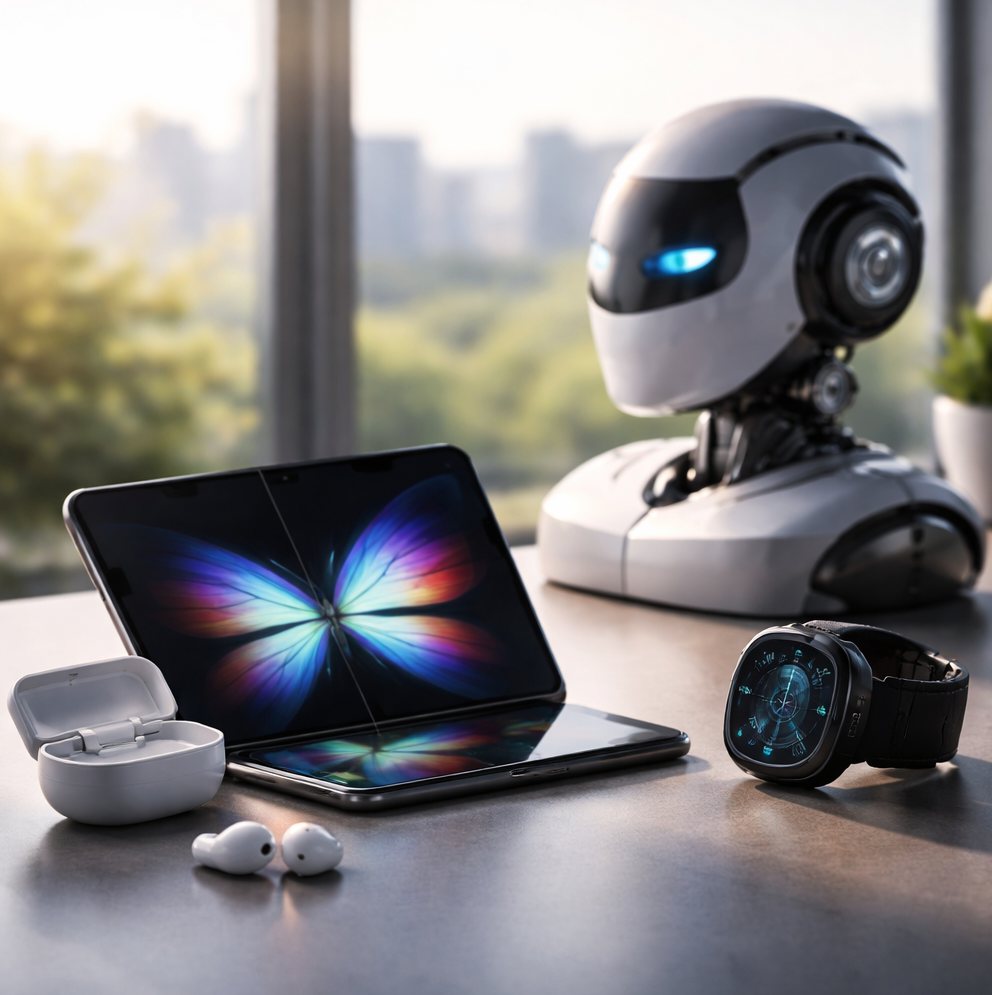 In parallel with AI, quantum computing is a field that holds immense potential. Unlike classical computers, quantum computers leverage the principles of quantum mechanics, offering exponentially greater processing power. This capability enables them to solve complex problems that remain unsolvable with today’s technology.
While still in its infancy, quantum computing could revolutionize industries like cryptography, where encryption methods could become impenetrable. Additionally, it has the capacity to accelerate drug discovery in healthcare, facilitating the development of cures at unprecedented speeds.
The rise of smart cities
Urban environments are transforming into smart cities equipped with cutting-edge technologies aimed at improving quality of life. These cities utilize data-driven solutions to enhance infrastructure, reduce energy consumption, and streamline transportation systems. By integrating IoT (Internet of Things) devices, cities can gather real-time data, leading to informed decision-making and optimized urban planning.
Smart cities are not just about technological sophistication ; they also emphasize sustainability. With the growing concern over climate change, urban areas are adopting green technologies to minimize their carbon footprint and promote eco-friendly living.
Emerging technologies in healthcare
Healthcare is experiencing a technological revolution that is profoundly impacting patient care. From telemedicine to AI-driven diagnostics, technology is bridging the gap between patients and healthcare providers. Especially in remote areas, telemedicine is making healthcare accessible, ensuring that individuals receive timely medical attention.
Furthermore, wearables are playing a critical role in preventive healthcare. By monitoring vital signs and providing real-time feedback, these devices empower individuals to take charge of their health. As these technologies advance, they promise to make healthcare more personalized and efficient.
Challenges and ethical considerations
While technology offers numerous benefits, it also presents challenges that must be addressed. Privacy concerns arise with increasing data collection, and there is a pressing need to safeguard personal information. The ethical implications of AI and automation, particularly in terms of job displacement, cannot be ignored. As society becomes more digitized, creating a balance between technological advancement and ethical responsibility is crucial.
In conclusion, as we navigate this technological era, embracing innovation while acknowledging its challenges is paramount. The future, driven by these advancements, holds promises of prosperity and a better quality of life, provided we steer our course wisely.




 Let’s take a closer look at three common price brackets. In the entry-level category (under £50), you’ll often find high chairs that are lightweight and functional, though somewhat limited. The IKEA Antilop, for instance, is a perennial favourite among minimalist parents for its no-frills design and ease of cleaning. While it lacks reclining features or adjustable footrests, it’s compact, easy to store, and well-reviewed for short mealtimes. For budget-conscious households or occasional use at grandparents’ homes, these models often make sense.
 Consider a user manual for a high-tech medical device or a chemical safety data sheet. Any error in terminology or phrasing could lead to operational failure or even risk lives. This is what sets technical translation apart from general translation. It involves the mastery of terminology and an understanding of the underlying technical processes being described. Linguists working in this field must become quasi-engineers, quasi-scientists, or quasi-programmers, depending on the subject matter.


 Before diving into tonfa training, it’s essential to understand the weapon’s design and functionality. A tonfa consists of a handle perpendicular to the main shaft, allowing for a variety of grips and strikes. This design makes it highly adaptable for both offensive and defensive techniques. Beginners should start by familiarizing themselves with the basic grips, such as the standard grip and the reverse grip, which form the foundation of tonfa techniques.